
Many potential parents who struggle with fertility challenges want to know why.
If you and your partner have undergone fertility testing that didn’t provide conclusive answers, preimplantation genetic testing (PGT) may help. PGT assists patients in learning more about their embryo(s) health, reasons behind fertility difficulties, and chances for a successful pregnancy.
Comprehensive preimplantation genetic testing can also dramatically reduce your risk of passing severe medical disorders to your offspring.
If your fertility treatment solutions include IVF, it is essential to learn about the different types of testing and how they can help lower your odds of a failed pregnancy. Contact us today to learn more. We will be more than happy to answer your questions about IVF.
What is Preimplantation Genetic Testing (PGT)?
Preimplantation Genetic Testing (PGT) can be a crucial step in your family-building journey. We are here to compassionately guide you through understanding all of your options. Our team is committed to providing expert fertility care and helping you make informed decisions, so you feel confident every step of the way.
What is PGT and how does it work?
Preimplantation genetic testing is a diagnostic fertility treatment test that identifies potential genetic irregularities within embryos created by in vitro fertilization (IVF).
These tests help your fertility doctor choose the best embryo to transfer into your uterus, lowering your risk of passing on genetic disorders to your offspring and miscarriage.
Doctors perform these three types of PGT tests on embryos during IVF:
- Preimplantation genetic screening for abnormal chromosome number (PGT-A)
PGT-A is typically offered to women over 37 with a history of miscarriage or failed IVF cycles. Your doctor may also recommend this test if you have a family history of chromosome problems. - Preimplantation genetic testing for monogenic disease (PGT-M)
PGT-M is designed for individuals who have a known risk of having a child with a specific genetic disorder. - Preimplantation genetic testing structural rearrangement (PGT-SR)
PGT-SR helps determine whether embryos created through IVF have chromosomes arranged abnormally (inversion) or not sized correctly (translocation).
These PGT serves two essential purposes. The first is to identify and disqualify embryos with genetic abnormalities as they can cause failed implantation and miscarriage, ending in an unsuccessful IVF.
The second purpose is to identify and disqualify embryos with genetic irregularities, as they can cause a child to be born with a genetic disorder, leading to death or severe health conditions.
Benefits of embryo genetic testing in IVF
Potential parents with a family history of particular disorders can benefit from preimplantation genetic diagnosis (PGD) screening for inherited conditions.
PGD is a specialized procedure that screens for a broad spectrum of genetic disorders and abnormalities that could inhibit fetal gestation. The process also screens for inherited conditions that could lead to serious and potentially tragic medical issues.
With PGD, only embryos free of disease and potential complications are implanted or frozen for later use.
Is PGT safe for embryos?
Preimplantation genetic testing for embryos is generally considered safe, though there are potential minor risks associated with any medical procedure.
For personalized information and to discuss any specific questions or concerns about your individual situation, it is always best to consult directly with our fertility specialists to discuss your individual case.
Types of PGT: PGD vs. PGS
Preimplantation genetic testing encompasses several options. We are here to guide you, explaining the various types of PGT testing and helping you choose what is right for your unique journey.
Preimplantation genetic diagnosis (PGD), now called PGT-M, screens for specific gene mutations that you or your partner might carry. This allows you to reduce the risk of passing on inherited disorders to your child.
Preimplantation genetic screening (PGS), now known as PGT-A, looks for chromosomal abnormalities in embryos. It helps us identify which embryos are most likely to lead to a successful pregnancy.
Deciding between these screening options is a personal and important step. We will walk you through the details and implications of each, ensuring you feel confident and informed.
How is PGD testing performed during IVF?
During IVF, doctors check embryos for genetic issues using PGD. They take a few cells from the embryos and test them to see if they have any genetic problems. This helps them choose healthy embryos to implant in the uterus, increasing the chances of a successful pregnancy and a healthy baby.
Who Should Consider PGT Testing
If you have the following concerns, you might want to consider genetic testing:
- History of genetic disorders: If you or your partner are carriers for a genetic condition, genetic IVF offers a way to screen embryos for that specific disorder.
- Advanced age: As maternal or paternal age increases, so does the risk of chromosomal abnormalities. Pre genetic screening can help reduce the chance of miscarriage related to these issues.
- Recurrent pregnancy loss or failed IVF: For patients with multiple miscarriages or failed cycles, IVF genetic testing preimplantation testing may uncover underlying chromosomal issues.
- Gender considerations: Genetic IVF can also offer family balancing options or help prevent gender-linked hereditary diseases.
The PGT Testing Process During IVF
After your embryos are created through IVF, a small, safe embryo biopsy is performed. These cells are then sent for analysis while your embryos are cryopreserved. The results typically take two weeks to obtain.
Once the results are available, our team will help you review the findings and select the best embryo to transfer, maximizing your chances for a healthy pregnancy and your family-building goals.
Understanding the Cost of Preimplantation Genetic Testing
We are committed to helping you understand all aspects of your treatment plan, providing clarity so you can feel informed and confident.
Factors that influence PGT pricing
The cost of PGS can vary widely depending on several factors, including the location and reputation of the clinic, the specific testing methods used, the number of embryos being tested, and whether additional services such as embryo freezing or genetic counseling are included.
How much does IVF with PGT cost in California?
On average, PGS can range from several hundred to several thousand dollars per embryo tested. It’s essential to consult with your healthcare provider and insurance company to get an accurate estimate of costs and any potential coverage options available to you.
Insurance coverage for genetic testing with IVF
Very few insurers cover the cost of preimplantation genetic testing. However, certain carriers will cover the cost under specific circumstances. Our financial counselor will be more than happy to help you better understand your options.
Get Peace of Mind with Preimplantation Genetic Testing at PRC
PGT for inherited conditions empowers parents with the tools they need to achieve healthy pregnancies.
Why choose PRC for advanced IVF with PGT?
Our fertility specialists at Pacific Reproductive Center have helped hundreds of patients overcome their reproductive obstacles using leading-edge tools and resources designed to quickly and accurately identify irregularities that lead to miscarriages or life-threatening conditions in surviving children.
Schedule a consultation with PRC today
If you’re interested in preimplantation genetic testing, please call us at 866-322-8171 or use our online contact form to schedule a consultation.
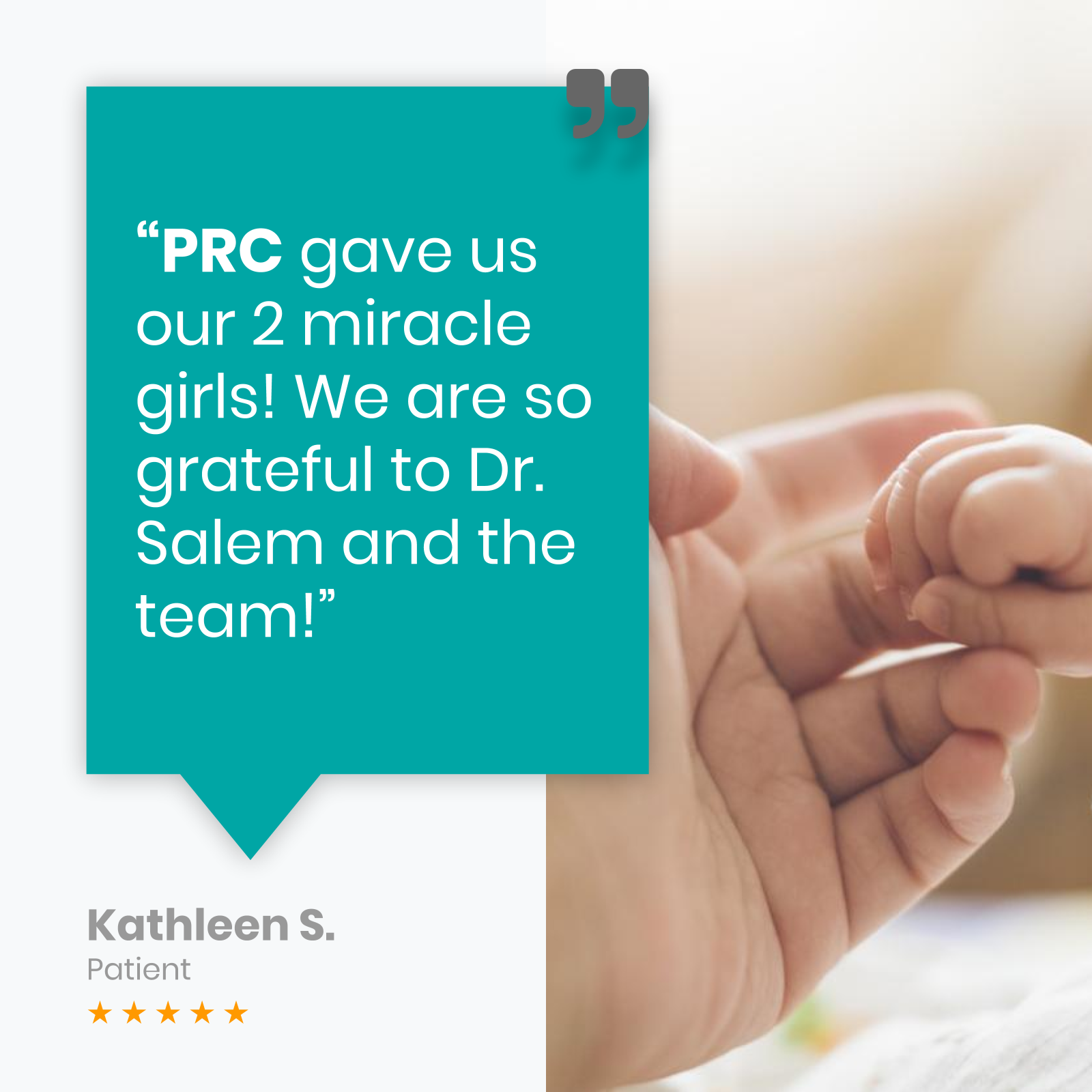

Looking for the Best Fertility Clinic in Southern California?
Pacific Reproductive Center has four convenient locations throughout Southern California, making it easy for patients to receive quality care close to home. Each IVF fertility center has an on-site lab, next-generation services, and state-of-the-art equipment.
Whether in Glendale, Torrance, Irvine, or Corona, our world-class fertility doctors can help you build the family you’ve always wanted.
PRC Torrance
3720 Lomita Blvd, Suite 200 Torrance, CA 90505
3720 Lomita Blvd, Suite 200 Torrance, CA 90505
PRC Glendale
116 E. Broadway, Suite 300 Glendale, CA 91205
116 E. Broadway, Suite 300 Glendale, CA 91205
PRC Irvine
10 Post Irvine, CA 92618
10 Post Irvine, CA 92618
PRC Corona
381 Corporate Terrace Corona, CA 92879
381 Corporate Terrace Corona, CA 92879
CALL TODAY! 424-340-0871